Margaret Mitchell is a computer scientist who works on algorithmic bias and fairness in machine learning. She is most well known for her work on automatically removing undesired biases concerning demographic groups from machine learning models, as well as more transparent reporting of their intended use. == Education == Mitchell obtained a bachelor's degree in linguistics from Reed College, Portland, Oregon, in 2005. After having worked as a research assistant at the OGI School of Science and Engineering for two years, she subsequently obtained a Master's in Computational Linguistics from the University of Washington in 2009. She enrolled in a PhD program at the University of Aberdeen, where she wrote a doctoral thesis on the topic of Generating Reference to Visible Objects, graduating in 2013. == Career and research == Mitchell is best known for her work on fairness in machine learning and methods for mitigating algorithmic bias. This includes her work on introducing the concept of 'Model Cards' for more transparent model reporting, and methods for debiasing machine learning models using adversarial learning. Margaret Mitchell created the framework for recognizing and avoiding biases by testing with a variable for the group of interest, predictor and an adversary. In 2012, Mitchell joined the Human Language Technology Center of Excellence at Johns Hopkins University as a postdoctoral researcher, before taking up a position at Microsoft Research in 2013. At Microsoft, Mitchell was the research lead of the Seeing AI project, an app that offers support for the visually impaired by narrating texts and images. In November 2016, she became a senior research scientist at Google Research and Machine intelligence. While at Google, she founded and co-led the Ethical Artificial Intelligence team together with Timnit Gebru. In May 2018, she represented Google in the Partnership on AI. In February 2018, she gave a TED talk on "How we can build AI to help humans, not hurt us". In January 2021, after Timnit Gebru's termination from Google, Mitchell reportedly used a script to search through her corporate account and download emails that allegedly documented discriminatory incidents involving Gebru. An automated system locked Mitchell's account in response. In response to media attention Google claimed that she "exfiltrated thousands of files and shared them with multiple external accounts". After a five-week investigation, Mitchell was fired. Prior to her dismissal, Mitchell had been a vocal advocate for diversity at Google, and had voiced concerns about research censorship at the company. In late 2021, she joined AI start-up Hugging Face. Mitchell is a co-founder of Widening NLP, a special interest group within the Association for Computational Linguistics (ACL) seeking to increase the proportion of women and minorities working in natural language processing; and Computational Linguistics and Clinical Psychology, an annual workshop within the ACL that brings together clinicians and computational linguists to advance the state of the art in clinical psychology.
Metigo
metigo is a software application that performs image-based modelling and close range photogrammetry. It produces rectified imagery plans, true ortho-projections on planar, cylindric and conic surfaces, 3D photorealistic models, measurements from photography and mappings on a photographic base for uses in the cultural heritage sector, mainly conservation. == Products == The metigo product line currently consists of the mapping software metigo MAP, the stereo-photogrammetry modeling software metigo 3D, the free viewer metigo VIEW. These products are all standalone and are not depending on other software, such as AutoCAD. === metigo MAP === metigo MAP is mainly used to map findings and conservation measured on a uniform metric photographic base. Therefore, photos of planar surfaces can be rectified based on geometrical informations, e.g. height and width of a rectangle, or cartesian coordinates measured by total station. Beside rectified imagery several other metric mapping bases can be imported and used: true ortho-projections; scaled scans of plans and plots; CAD-files; 3D models, such as digital surface models (DSM) produced by stereo-photogrammetry, SfM or 3D scanning. metigo MAP 's strong point is that rectified imagery taken with different techniques (visual light, sided light, IR, UV, UV-fluorescence, X-ray), historic images and photos taken at various stages of the conservation process can be superimposed and evaluated mutually. The user can allocate several attributes, such as different conservation measures and damage classes, to the mapped geometries. The mappings can be analysed by geometries as well as by user-defined attributes at any stage of the project. metigo MAP targets mainly conservators in different cultural heritage fields. Using it no specialist knowledge of surveying and photogrammetric techniques are needed. === metigo 3D === metigo 3D is a stereo-photogrammetric kit that allows to calculate bundle adjustments (axios3D), create high-quality 3D point clouds using multiple stereo photo pairs combined with metric survey data, mesh these point clouds, texture the meshes with high-resolution image data to create photo-realistic models, ortho-project orientated images on digital surface models (DSM) on planes and best-fit cylinders and cones, create unwrappings and developed views of curved surfaces, analyse deformations of 3D surfaces. metigo 3D targets metric survey specialists working in the cultural heritage sector. == Supported file formats == metigo has the ability to read the following formats: images: JPEG (.jpg), Tiff (.tif), Bitmaps (.bmp), CompuServ (.gif), Encapsualated Postscript (.eps), PCX (.pcx), Photo-CD (.pcd), PICT (.pcd), PNG (.png), Targa (.tga), RAW-format of several camera brands. CAD: DBX, DXF, DWG. 3D: many ASCII-formats (.stl, .wrl, etc.) point data: format editor for ASCII files. == Supported languages == Currently, an English and German version of the software is supported. For metigo MAP beside these a French and Polish GUI is offered for sale. == Applications == The main applications of metigo are: conservation in the cultural heritage context, e.g. stone conservation paintings tapestry etc. architecture, archaeology, many other are possible, e.g. forensics. == History == The first public release of metigo was in 2000.
Robot Monk Xian'er
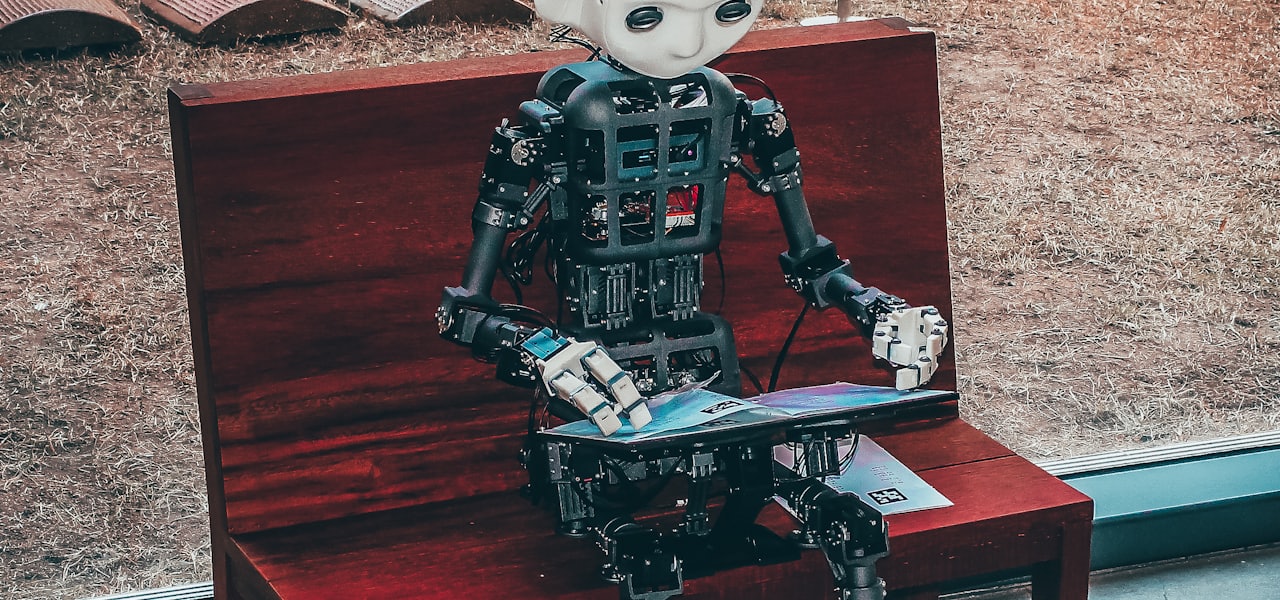
Robot Monk Xian'er (Chinese: 贤二机器僧) is a humanoid robot based on the cartoon character Xian'er. It was developed by a team of monks, volunteers and AI experts from Beijing Longquan Monastery in Beijing, China. He can follow human instructions to make body movements, read scriptures and play Buddhist music. He can chat and respond to people's emotional and spiritual questions with Buddhist wisdom. As a chatbot, Robot Monk Xian'er is available on certain public platforms including WeChat and Facebook. Over the years, master Xuecheng, the abbot of Beijing Longquan Monastery, replied to thousands of questions on Sina Weibo. These questions and their answers become the data source of the chatbot.
CMU Pronouncing Dictionary
The CMU Pronouncing Dictionary (also known as CMUdict) is an open-source pronouncing dictionary originally created by the Speech Group at Carnegie Mellon University (CMU) for use in speech recognition research. CMUdict provides a mapping orthographic/phonetic for English words in their North American pronunciations. It is commonly used to generate representations for speech recognition (ASR), e.g. the CMU Sphinx system, and speech synthesis (TTS), e.g. the Festival system. CMUdict can be used as a training corpus for building statistical grapheme-to-phoneme (g2p) models that will generate pronunciations for words not yet included in the dictionary. The most recent release is 0.7b; it contains over 134,000 entries. An interactive lookup version is available. == Database format == The database is distributed as a plain text file with one entry to a line in the format "WORD
Neural radiance field
A neural radiance field (NeRF) is a neural field for reconstructing a three-dimensional representation of a scene from two-dimensional images. The NeRF model enables downstream applications of novel view synthesis, scene geometry reconstruction, and obtaining the reflectance properties of the scene. Additional scene properties such as camera poses may also be jointly learned. First introduced in 2020, it has since gained significant attention for its potential applications in computer graphics and content creation. == Algorithm == The NeRF algorithm represents a scene as a radiance field parametrized by a deep neural network (DNN). The network predicts a volume density and view-dependent emitted radiance given the spatial location ( x , y , z ) {\displaystyle (x,y,z)} and viewing direction in Euler angles ( θ , Φ ) {\displaystyle (\theta ,\Phi )} of the camera. By sampling many points along camera rays, traditional volume rendering techniques can produce an image. === Data collection === A NeRF needs to be retrained for each unique scene. The first step is to collect images of the scene from different angles and their respective camera pose. These images are standard 2D images and do not require a specialized camera or software. Any camera is able to generate datasets, provided the settings and capture method meet the requirements for SfM (Structure from Motion). This requires tracking of the camera position and orientation, often through some combination of SLAM, GPS, or inertial estimation. Researchers often use synthetic data to evaluate NeRF and related techniques. For such data, images (rendered through traditional non-learned methods) and respective camera poses are reproducible and error-free. === Training === For each sparse viewpoint (image and camera pose) provided, camera rays are marched through the scene, generating a set of 3D points with a given radiance direction (into the camera). For these points, volume density and emitted radiance are predicted using the multi-layer perceptron (MLP). An image is then generated through classical volume rendering. Because this process is fully differentiable, the error between the predicted image and the original image can be minimized with gradient descent over multiple viewpoints, encouraging the MLP to develop a coherent model of the scene. == Variations and improvements == Early versions of NeRF were slow to optimize and required that all input views were taken with the same camera in the same lighting conditions. These performed best when limited to orbiting around individual objects, such as a drum set, plants or small toys. Since the original paper in 2020, many improvements have been made to the NeRF algorithm, with variations for special use cases. === Fourier feature mapping === In 2020, shortly after the release of NeRF, the addition of Fourier Feature Mapping improved training speed and image accuracy. Deep neural networks struggle to learn high frequency functions in low dimensional domains; a phenomenon known as spectral bias. To overcome this shortcoming, points are mapped to a higher dimensional feature space before being fed into the MLP. γ ( v ) = [ a 1 cos ( 2 π B 1 T v ) a 1 sin ( 2 π B 1 T v ) ⋮ a m cos ( 2 π B m T v ) a m sin ( 2 π B m T v ) ] {\displaystyle \gamma (\mathrm {v} )={\begin{bmatrix}a_{1}\cos(2{\pi }{\mathrm {B} }_{1}^{T}\mathrm {v} )\\a_{1}\sin(2\pi {\mathrm {B} }_{1}^{T}\mathrm {v} )\\\vdots \\a_{m}\cos(2{\pi }{\mathrm {B} }_{m}^{T}\mathrm {v} )\\a_{m}\sin(2{\pi }{\mathrm {B} }_{m}^{T}\mathrm {v} )\end{bmatrix}}} Where v {\displaystyle \mathrm {v} } is the input point, B i {\displaystyle \mathrm {B} _{i}} are the frequency vectors, and a i {\displaystyle a_{i}} are coefficients. This allows for rapid convergence to high frequency functions, such as pixels in a detailed image. === Bundle-adjusting neural radiance fields === One limitation of NeRFs is the requirement of knowing accurate camera poses to train the model. Often times, pose estimation methods are not completely accurate, nor is the camera pose even possible to know. These imperfections result in artifacts and suboptimal convergence. So, a method was developed to optimize the camera pose along with the volumetric function itself. Called Bundle-Adjusting Neural Radiance Field (BARF), the technique uses a dynamic low-pass filter (DLPF) to go from coarse to fine adjustment, minimizing error by finding the geometric transformation to the desired image. This corrects imperfect camera poses and greatly improves the quality of NeRF renders. === Multiscale representation === Conventional NeRFs struggle to represent detail at all viewing distances, producing blurry images up close and overly aliased images from distant views. In 2021, researchers introduced a technique to improve the sharpness of details at different viewing scales known as mip-NeRF (comes from mipmap). Rather than sampling a single ray per pixel, the technique fits a gaussian to the conical frustum cast by the camera. This improvement effectively anti-aliases across all viewing scales. mip-NeRF also reduces overall image error and is faster to converge at about half the size of ray-based NeRF. === Learned initializations === In 2021, researchers applied meta-learning to assign initial weights to the MLP. This rapidly speeds up convergence by effectively giving the network a head start in gradient descent. Meta-learning also allowed the MLP to learn an underlying representation of certain scene types. For example, given a dataset of famous tourist landmarks, an initialized NeRF could partially reconstruct a scene given one image. === NeRF in the wild === Conventional NeRFs are vulnerable to slight variations in input images (objects, lighting) often resulting in ghosting and artifacts. As a result, NeRFs struggle to represent dynamic scenes, such as bustling city streets with changes in lighting and dynamic objects. In 2021, researchers at Google developed a new method for accounting for these variations, named NeRF in the Wild (NeRF-W). This method splits the neural network (MLP) into three separate models. The main MLP is retained to encode the static volumetric radiance. However, it operates in sequence with a separate MLP for appearance embedding (changes in lighting, camera properties) and an MLP for transient embedding (changes in scene objects). This allows the NeRF to be trained on diverse photo collections, such as those taken by mobile phones at different times of day. === Relighting === In 2021, researchers added more outputs to the MLP at the heart of NeRFs. The output now included: volume density, surface normal, material parameters, distance to the first surface intersection (in any direction), and visibility of the external environment in any direction. The inclusion of these new parameters lets the MLP learn material properties, rather than pure radiance values. This facilitates a more complex rendering pipeline, calculating direct and global illumination, specular highlights, and shadows. As a result, the NeRF can render the scene under any lighting conditions with no re-training. === Plenoctrees === Although NeRFs had reached high levels of fidelity, their costly compute time made them useless for many applications requiring real-time rendering, such as VR/AR and interactive content. Introduced in 2021, Plenoctrees (plenoptic octrees) enabled real-time rendering of pre-trained NeRFs through division of the volumetric radiance function into an octree. Rather than assigning a radiance direction into the camera, viewing direction is taken out of the network input and spherical radiance is predicted for each region. This makes rendering over 3000x faster than conventional NeRFs. === Sparse Neural Radiance Grid === Similar to Plenoctrees, this method enabled real-time rendering of pretrained NeRFs. To avoid querying the large MLP for each point, this method bakes NeRFs into Sparse Neural Radiance Grids (SNeRG). A SNeRG is a sparse voxel grid containing opacity and color, with learned feature vectors to encode view-dependent information. A lightweight, more efficient MLP is then used to produce view-dependent residuals to modify the color and opacity. To enable this compressive baking, small changes to the NeRF architecture were made, such as running the MLP once per pixel rather than for each point along the ray. These improvements make SNeRG extremely efficient, outperforming Plenoctrees. === Instant NeRFs === In 2022, researchers at Nvidia enabled real-time training of NeRFs through a technique known as Instant Neural Graphics Primitives. An innovative input encoding reduces computation, enabling real-time training of a NeRF, an improvement orders of magnitude above previous methods. The speedup stems from the use of spatial hash functions, which have O ( 1 ) {\displaystyle O(1)} access times, and parallelized architectures which run fast on modern GPUs. == Related techniques == === Plenoxels === Plen
BiP (software)
BiP is a freeware instant messaging application developed by Lifecell Ventures Cooperatief U.A., a subsidiary of Turkcell incorporated in the Netherlands. It allows users to send text messages, voice messages and video calling, and it can be downloaded from the App Store, Google Play, and Huawei AppGallery. BiP has over 53 million users worldwide, and was first released in 2013. == Functions == BiP is a secure, and free communication platform. BiP allows making video and audio calls, allows sharing images, videos and location. BiP includes instant translations to 106 languages and exchange rates. President Erdoğan's Communications Office opposed WhatsApp's enforcement of its updated privacy policy and announced that Erdoğan left WhatsApp and opened an account in Telegram and BiP. The Turkish Ministry of National Defense has announced that it will move information groups to BiP for the same reason. == Others == Banglalink announced a BiP messenger partnership in Bangladesh The Communications Office of President Erdoğan opposed WhatsApp's enforcement of its updated privacy policy and announced that Erdoğan left WhatsApp and opened an account in Telegram and BiP. The Turkish Ministry of National Defense has announced that it will move information groups to BiP for the same reason. The CEO of BiP is Burak Akinci. The number of downloads of the app is 80 million globally.
Live Transcribe
Live Transcribe is a mobile app for real-time captioning, developed by Google for the Android operating system. Development on the application began in partnership with Gallaudet University. It was publicly released as a free beta for Android 5.0+ on the Google Play Store on February 4, 2019. As of early 2023 it had been downloaded over 500 million times. == Development == Researchers Dimitri Kanevsky, Sagar Savla and Chet Gnegy at Google developed the app in collaboration with researchers at Gallaudet University, an American university for the education of the deaf and hard of hearing. The app uses machine learning to generate captions, similar to YouTube's auto-generated captions. In August 2019, Google made Live Transcribe an open-source project. == Features == The app uses speech recognition to generate live captions in over 80 languages with varying accuracy. The app, which requires connection to the Internet to function, is available to download on the Google Play Store. A later update to the app displayed information on sounds such as clapping, laughter, music, applause, and whistling. In May 2020, the app started supporting transcription in Albanian, Burmese, Estonian, Macedonian, Mongolian, Punjabi, and Uzbek, supporting 70 languages. In March 2022, the app was updated with support to transcribe offline, without Internet connection, so long as the appropriate language pack has been installed. The offline mode is only available for devices with 6GB of RAM and certain Google Pixel devices.